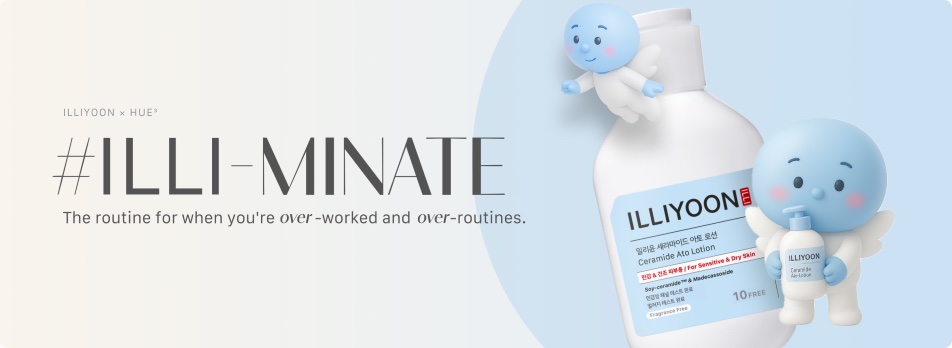
Skincare for people too tired to do skincare.
A campaign repositioning Illiyoon for the U.S., built for Amorepacific’s first American brand marketing challenge. Our team reached the semifinals and pitched it to the brand’s own marketing team.
Semifinalist
Amorepacific’s first U.S. brand marketing challenge
Pitched to HQ
presented to the Illiyoon marketing team
ILLI
an original character built from the hero product
CONTEXT
Illiyoon’s U.S. problem wasn’t efficacy. It was relevance.
Illiyoon is a well-established skincare brand in South Korea with little recognition in the U.S. Meanwhile, American skincare culture frames self-care as one more thing to keep up with, another checklist and another expectation, rather than a moment of rest.
EVIDENCE
The category sells rest as another obligation.
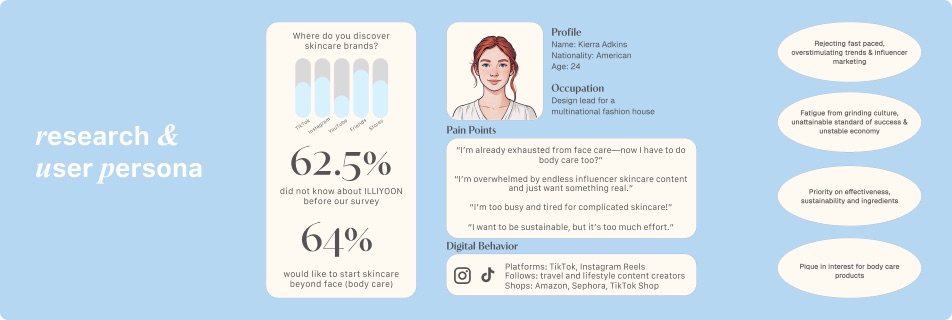
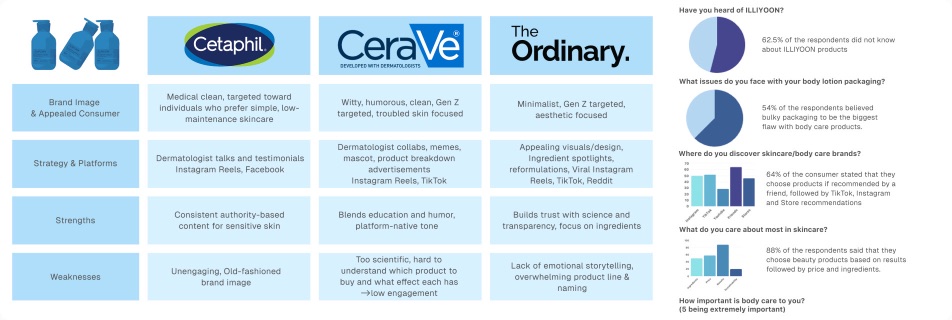
The research boards behind the positioning.
I ran primary research, surveys and interviews, rather than working from secondary sources alone, then analyzed the results alongside a competitive read of Cetaphil, CeraVe, and The Ordinary and built the STP and personas from both.
AUDIENCE
Not Gen Z. Gen Z at 9pm, after work.
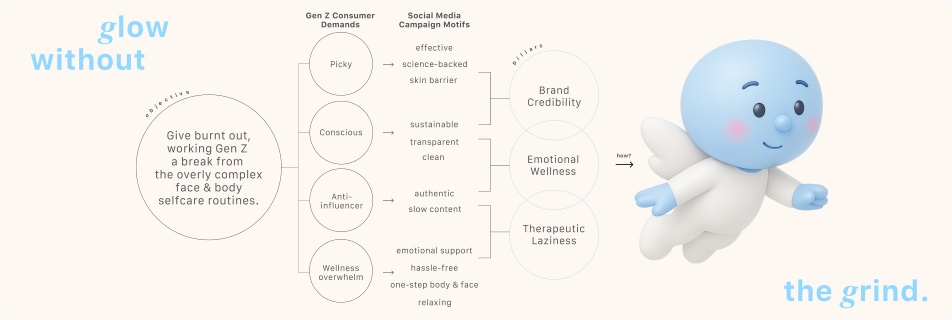
Most skincare marketing aims at Gen Z as a demographic. We aimed at a moment: someone who got home late, still has a routine waiting, and is deciding whether they have it in them tonight.
Narrowing from a generation to a time of day changed what the campaign had to do. It could not sell efficacy to people who already believe in efficacy. It had to lower the cost of showing up.
THE IDEA
A personal assistant for the part of the day you have nothing left for.
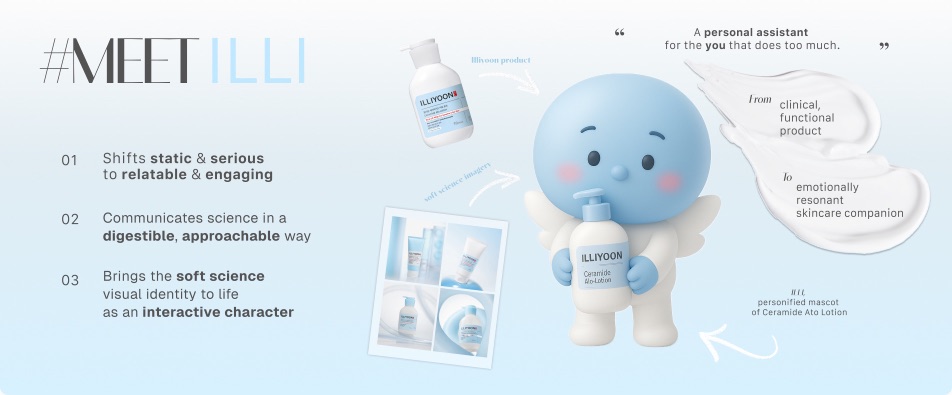
The face that makes soft science feel like a friend.
ILLI is an original character personified from the Ceramide Ato Lotion, built to sit beside you rather than instruct you. The campaign treats ILLI like a personal assistant for your routine: small nudges, company at the sink, none of the pressure of a regimen. The point was to move skincare out of the homework category and into the rest category. The tagline carries it: the routine for when you are over-worked and over-routines.
ILLI’s visuals were generated with Midjourney and ChatGPT, which let a three-person student team put a finished-looking character in front of a client in weeks. The decision to build a character at all came from the research, not the tools.
THE CAMPAIGN
Phased, not launched.
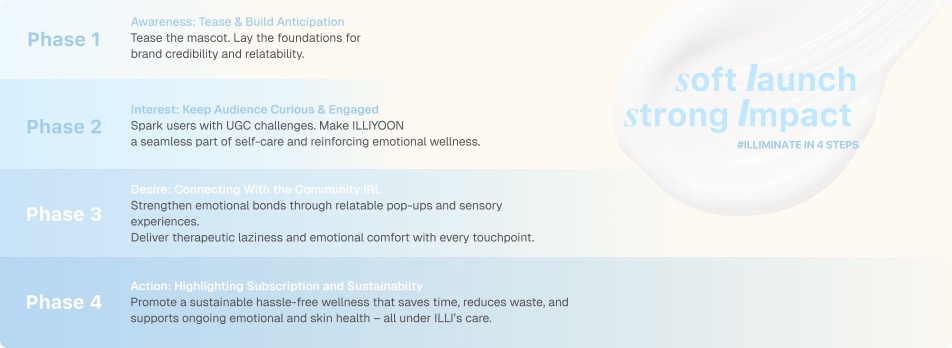
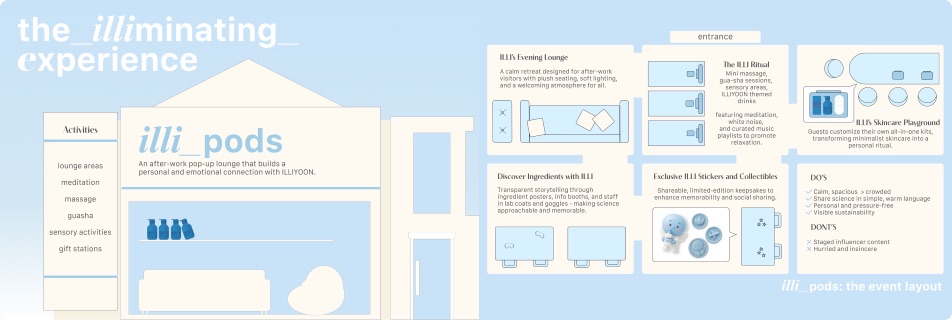
From feed to floor plan.
Rather than a single launch moment, ILLI is introduced slowly, building familiarity, trust, and emotional connection over time. The campaign begins on social with low-effort content, then carries the feeling offline: illi_pods, an after-work pop-up lounge framed as a comforting ritual rather than a high-energy event, honoring Gen Z schedules and their need for low-effort care.
THE PITCH
Ten minutes, on Zoom, to the people who own the brand.
The semifinal was the pitch. Hue³ presented to Illiyoon’s marketing team over Zoom, ten to fifteen minutes and then questions. Not a panel of professors judging a school project, the client’s own marketers deciding whether a repositioning of their brand held up.
I was creative and content lead on a team of three, and owned the positioning, the character, and the deck we presented.
- OUTCOME
- • Semifinalist in Amorepacific’s first U.S. brand marketing challenge
- • Pitched the campaign directly to the Illiyoon marketing team
AFTER
It persuaded a room. It never met an audience.
The campaign convinced professional marketers in fifteen minutes, which is a real test of whether a strategy holds together. It is not the same as testing whether ILLI works on the people she was designed for. The whole idea rests on small anti-burnout moments repeating over time, and nothing about a pitch can prove that. What I would want next is the least glamorous part: run the character for a month and see if anyone comes back.