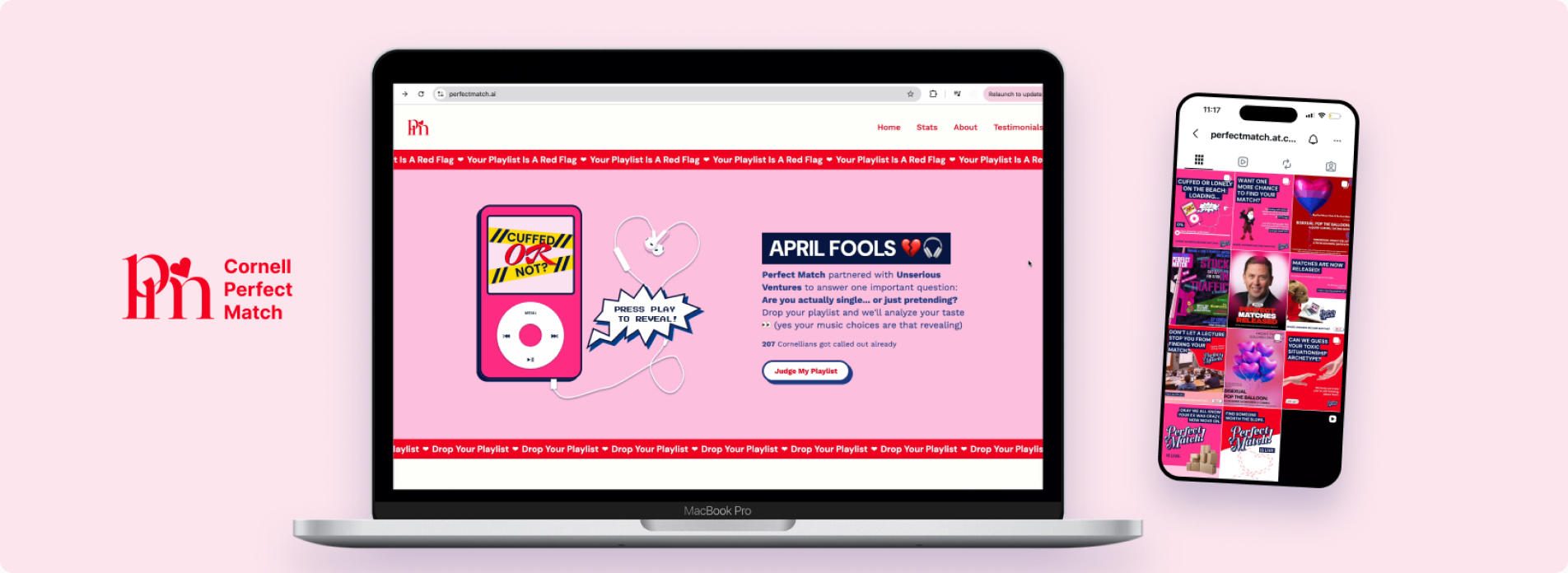
A campus dating site, and two problems in the right order.
Perfect Match had an algorithm and no business team. I built one, then found out the product’s real problem was that nobody believed it worked.
5,000+
students reached, up from 3,000
+160%
social engagement after the rebrand
$1,500
research partnership secured
CONTEXT
There was an engineering team. There was no business team.
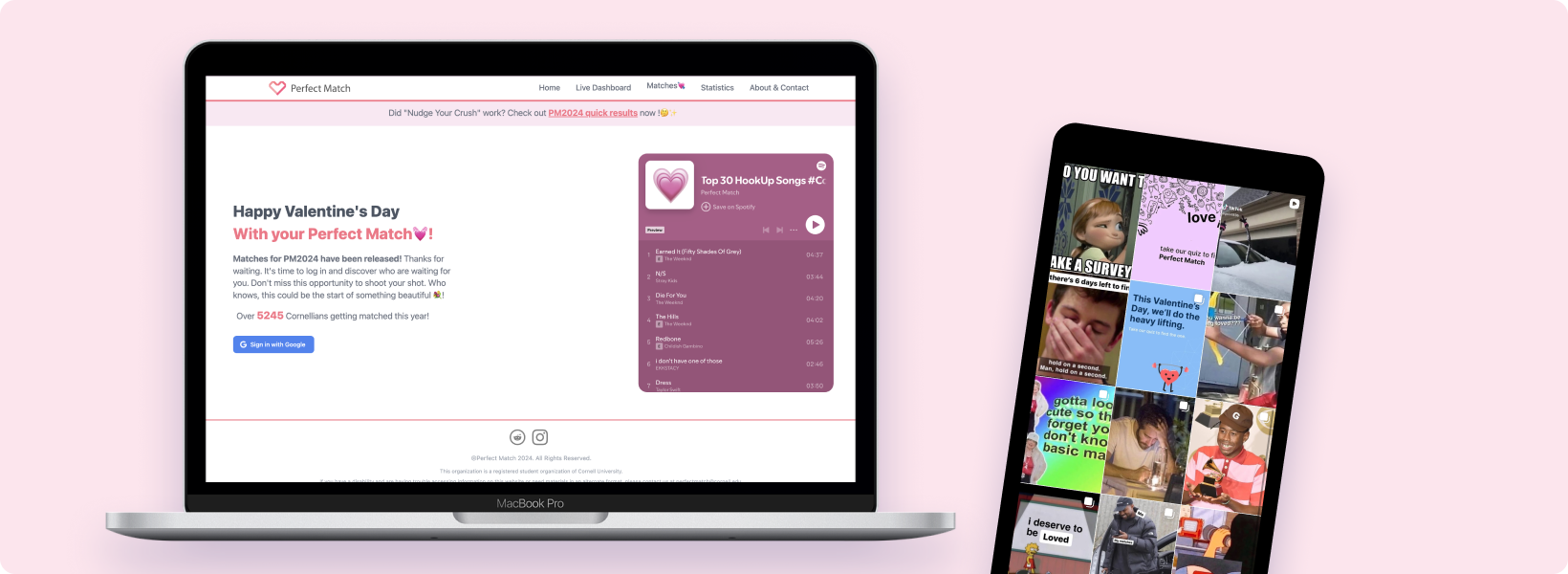
Perfect Match before the rebrand.
Perfect Match had a working matching algorithm and early traction, and no one owning positioning, brand, or growth. I joined as business lead and made the case internally for a full rebrand of the site and the Instagram before touching anything else.
EVIDENCE
Students wanted it. They didn’t believe it would work.
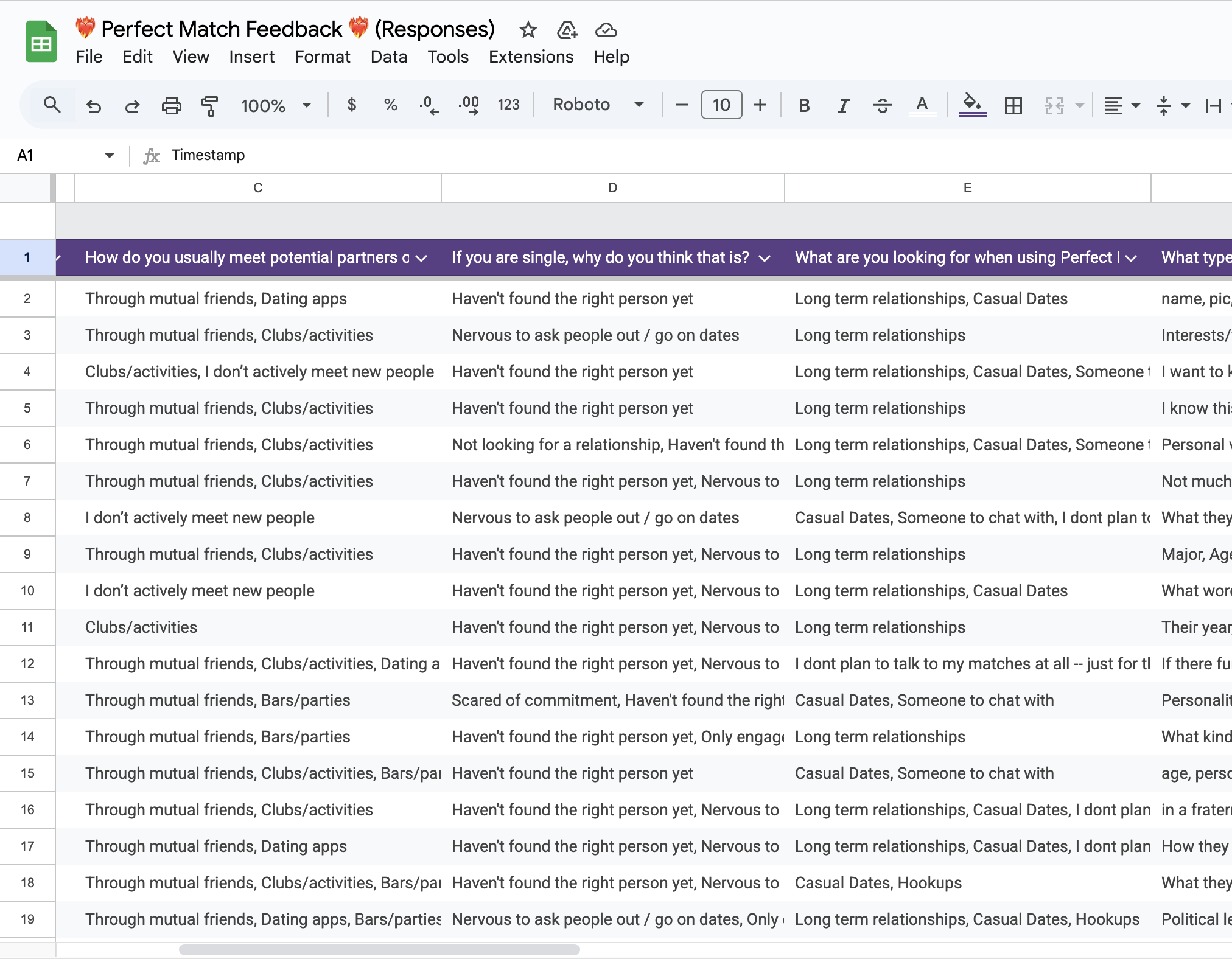
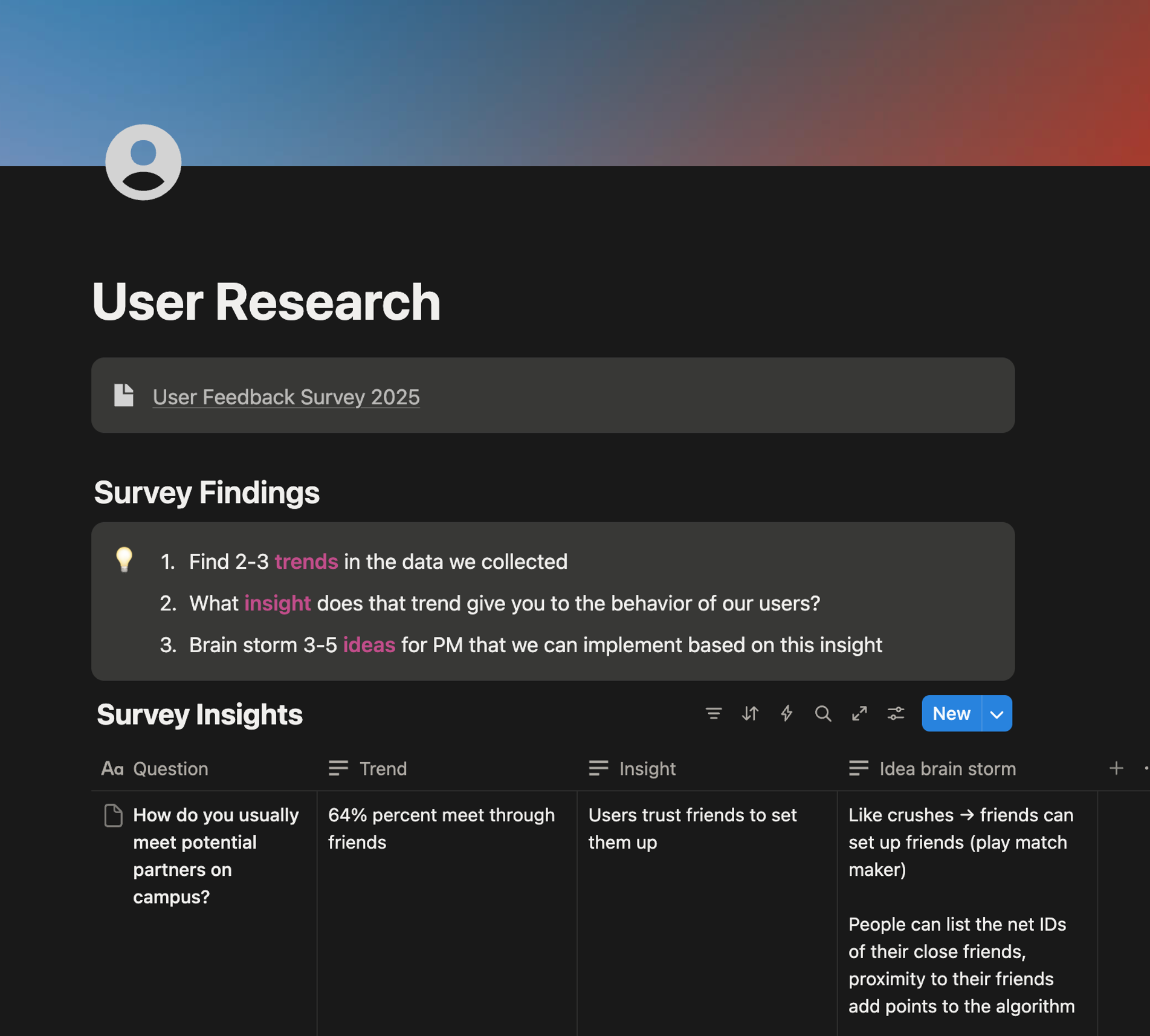
207 responses, and the barriers that came out of them.
I surveyed 207 students through Google Forms and analyzed the responses. Interest was high and trust was not: people assumed a student-built dating site wouldn’t deliver a real match.
The feed at the time was mostly date memes, which was funny and did nothing for credibility. We had a believability problem dressed up as a marketing problem.
THE MOVE
Keep the campus voice. Lose the amateur signal.

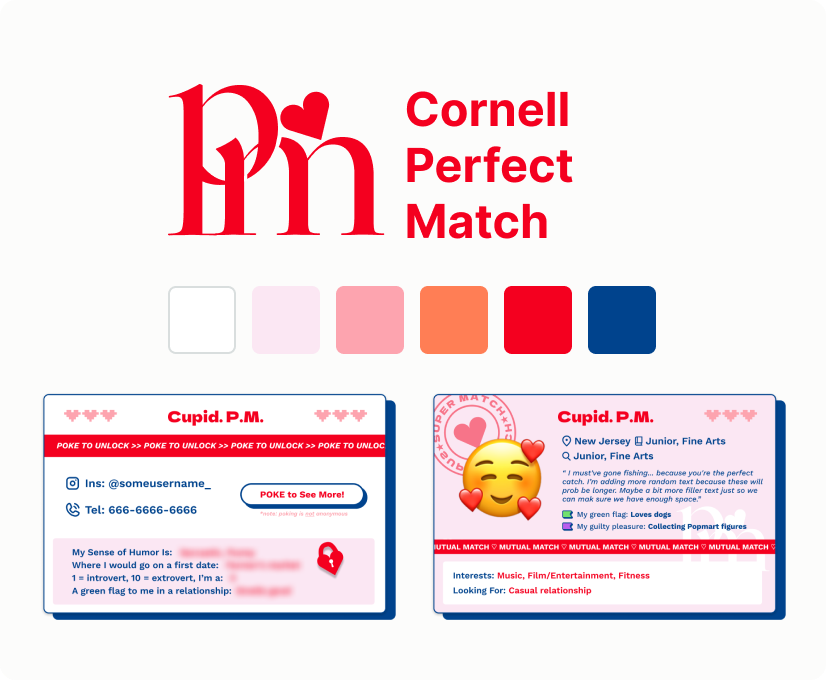
2025: warm, cute, built to feel approachable.
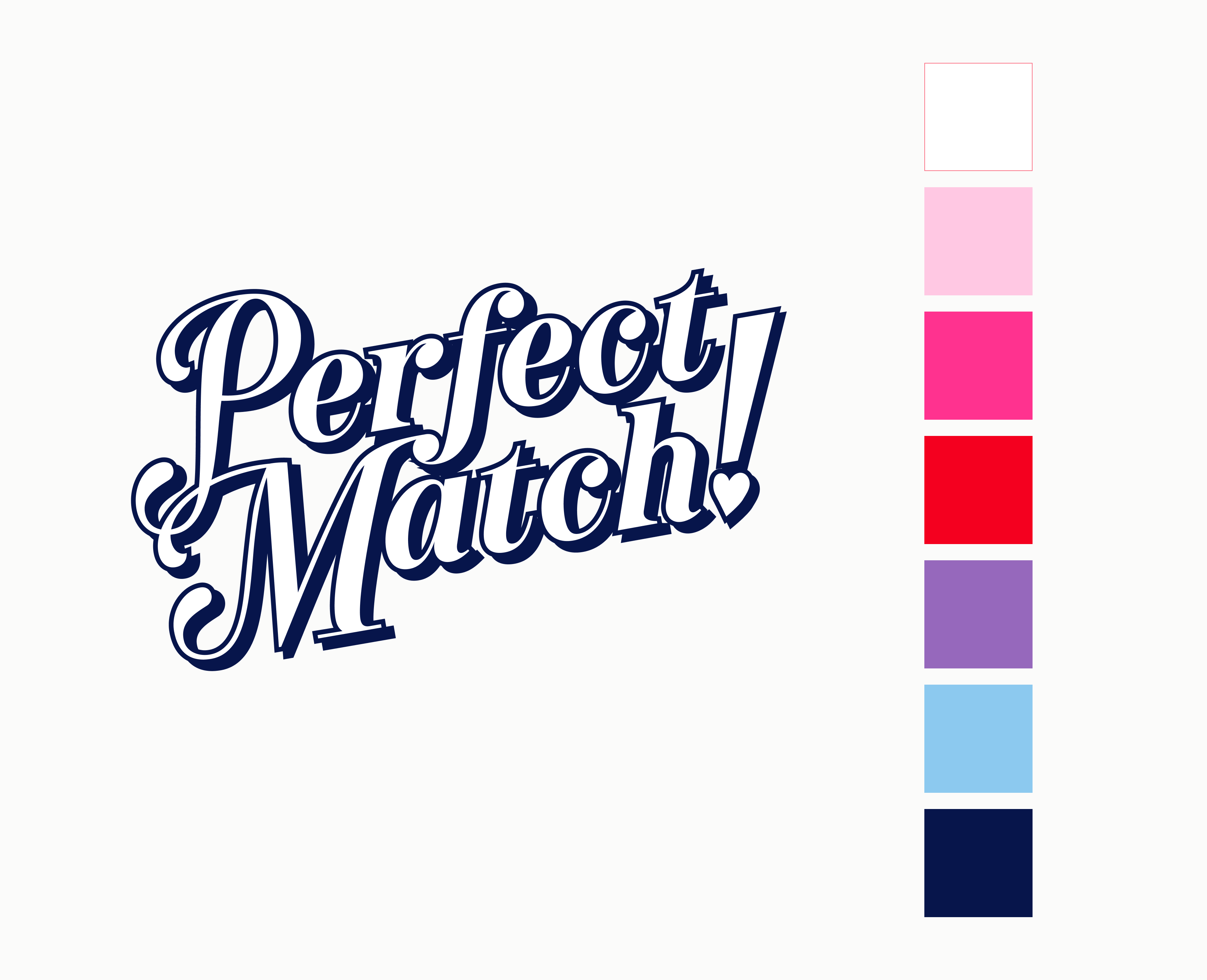
2026: bold and sexy, same bones.
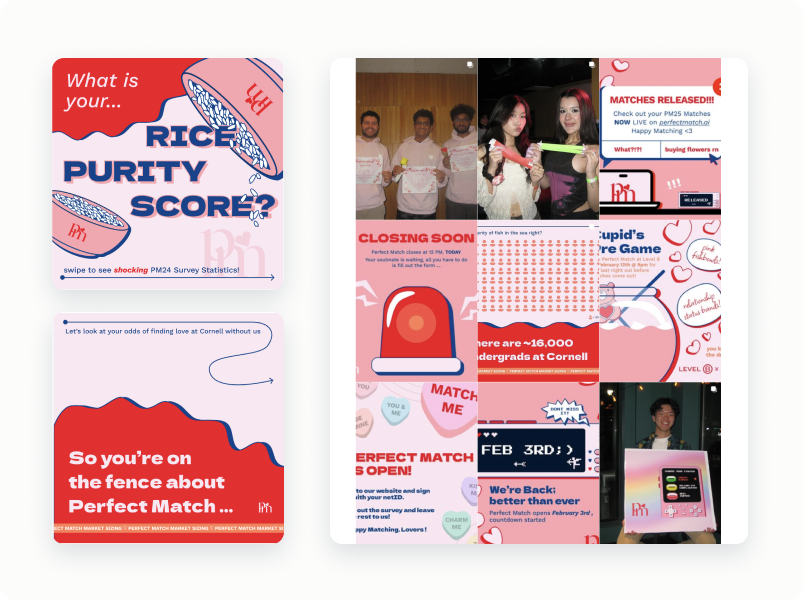
I rebranded around one rule: sound like Cornell, look like something that works. New logo, unified type and color system, redesigned homepage and match cards, and a repositioned Instagram that kept college humor but carried it in a cleaner, bolder frame.
I built it to be reskinned. The core identity holds every year, the seasonal look shifts. 2025 ran warm and cute. 2026 went bold and sexy.
Then I took it offline. IRL activations gave the brand a physical presence, including the Level B Bar × Perfect Match Party.
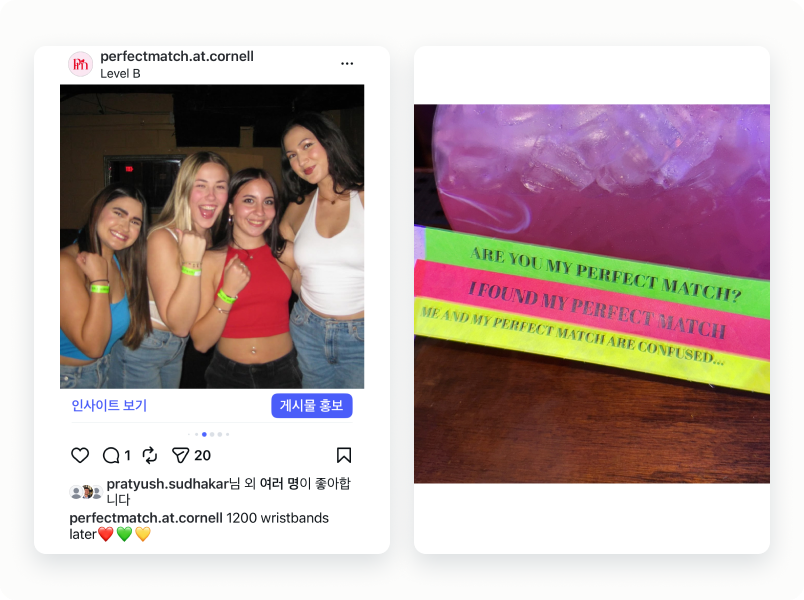
The party drew 1,200 attendees and now runs annually.
- OUTCOME
- • Users grew from 3,000 to 5,000+ on a campus of 15,000
- • Social engagement rose 160%
- • The annual rebrand became something students wait for. The core identity holds, the seasonal look shifts: warm and cute in 2024–25, bold and sexy in 2026.
- • The party became a recurring campus fixture, not a one-time launch (1000+ attend every year)
PARTNERSHIPS
Reach the campus couldn’t supply on its own.
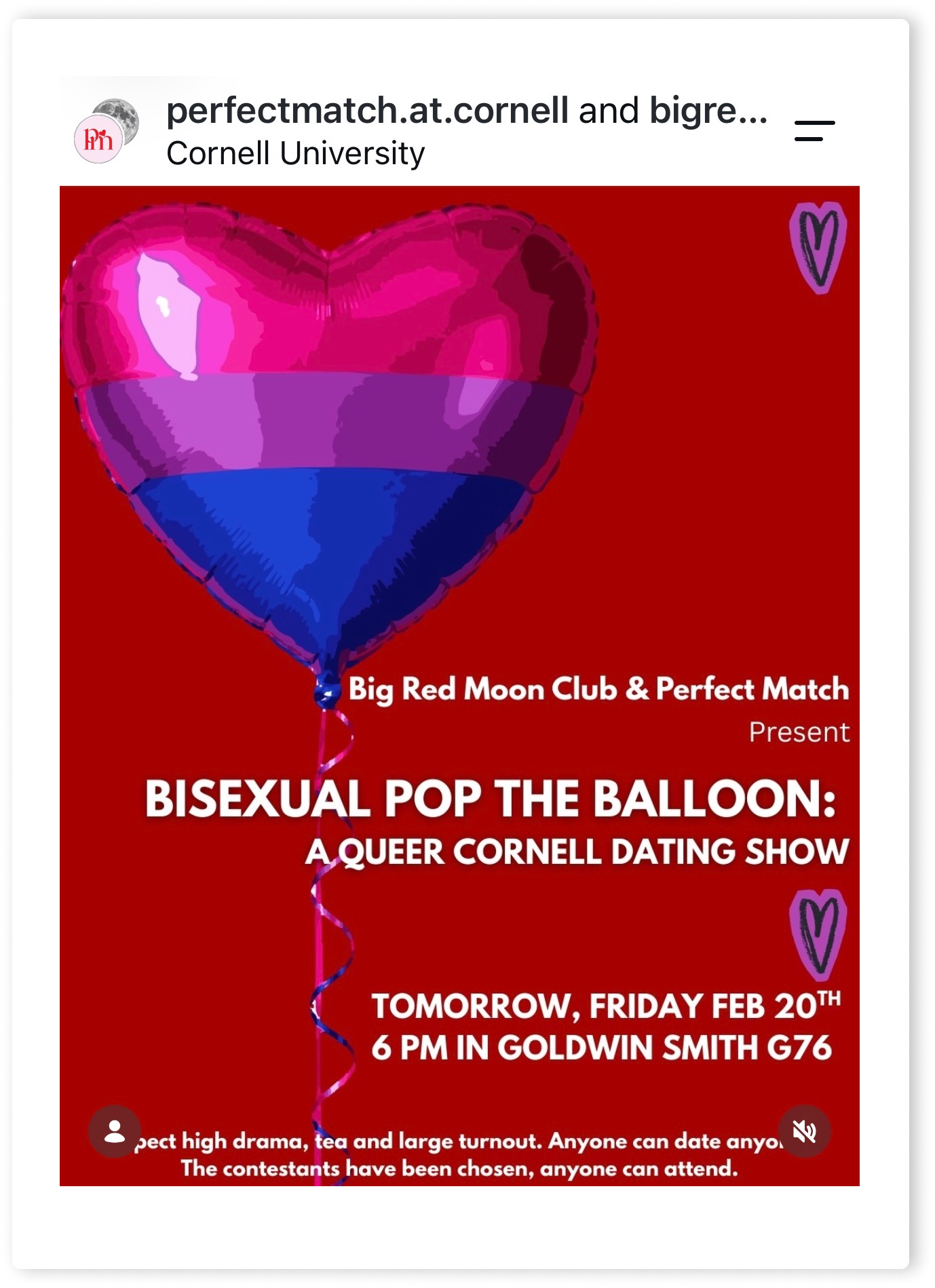
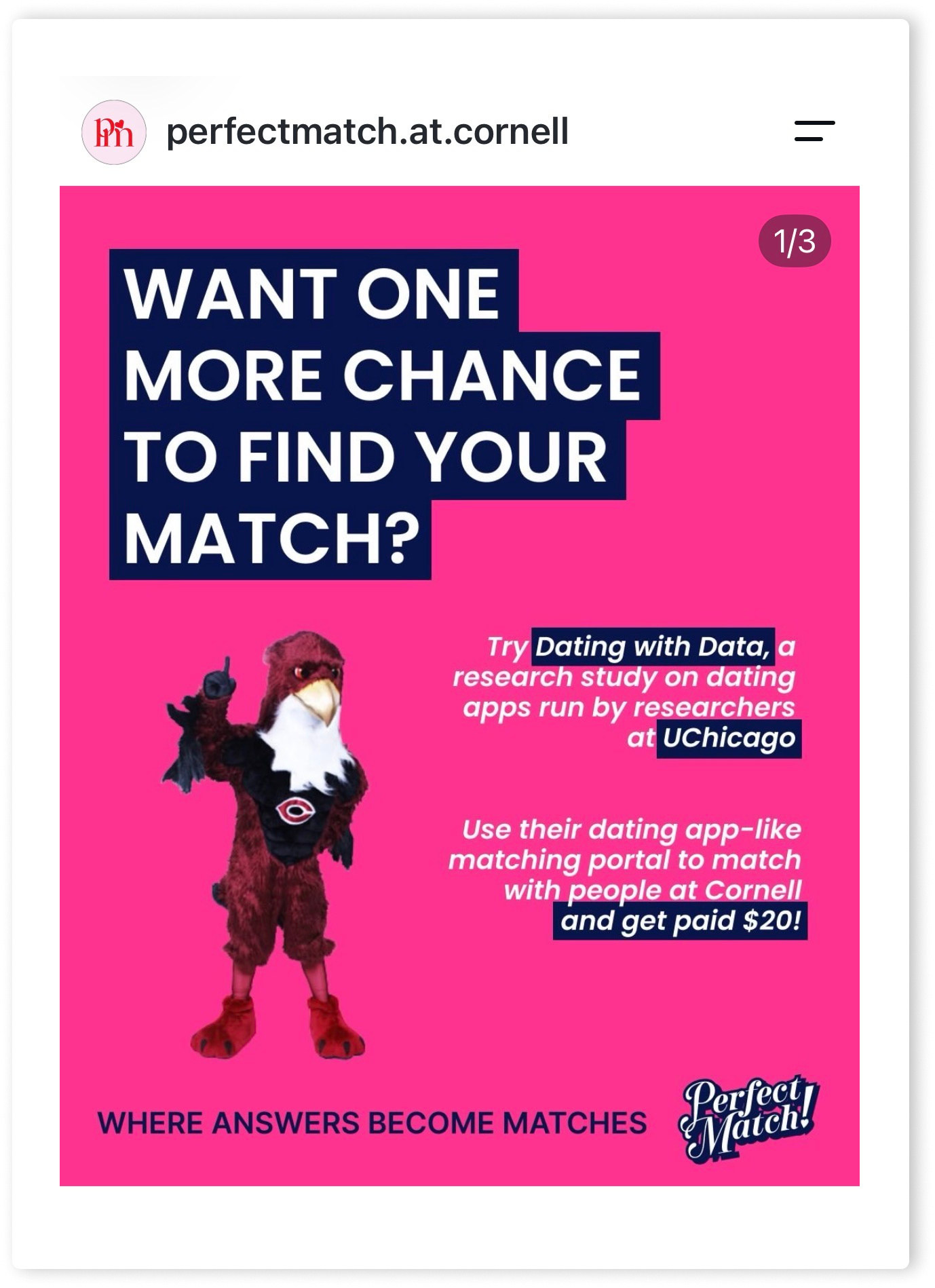
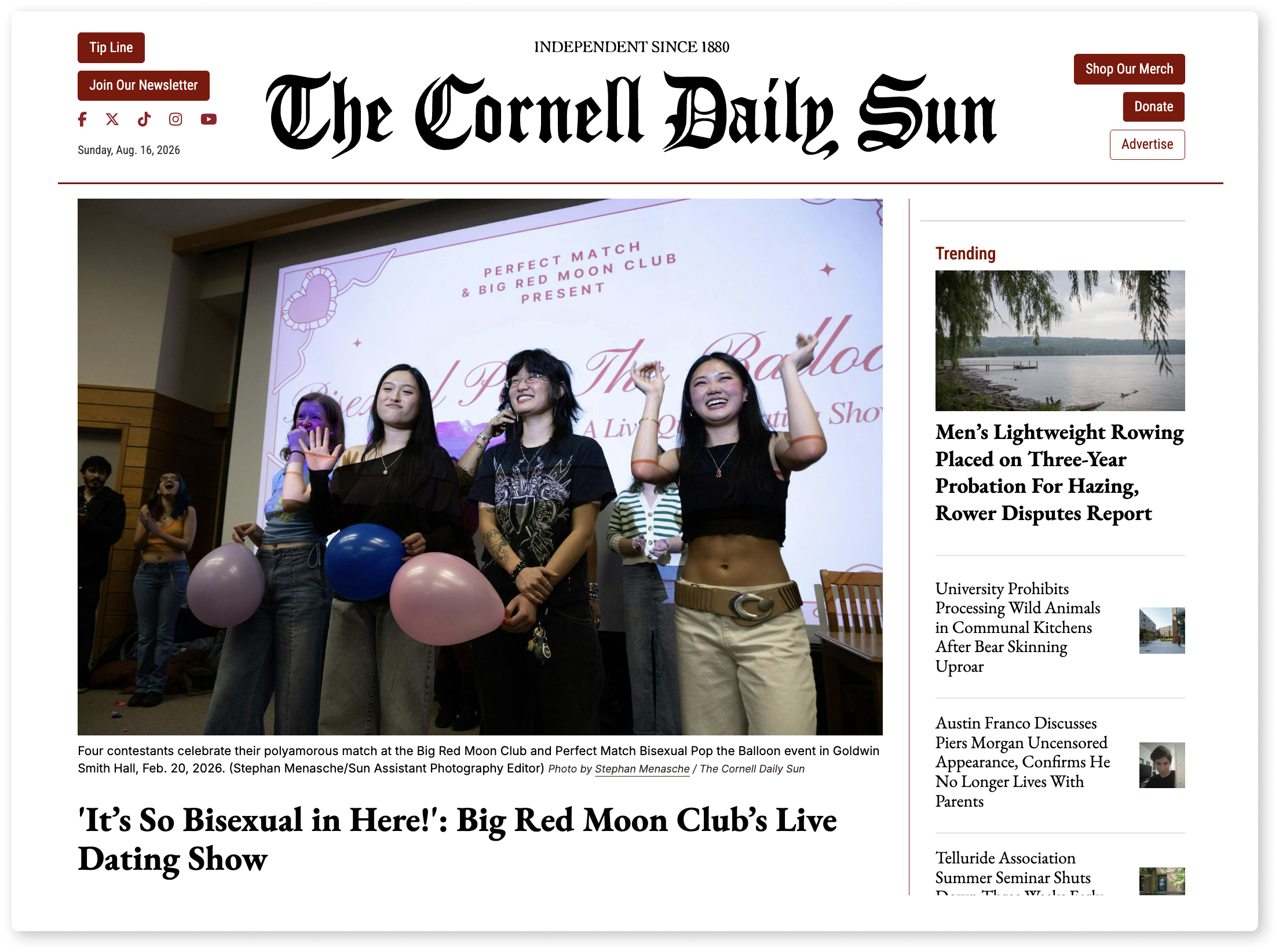
Two events, roughly 40,000 views across their social content.
I secured a research partnership out of the University of Chicago, integrated the collaboration into the site, and brought in $1,500 in sponsorship. Two further events built on it, generating around 40,000 views across their social content.
Alongside them, a steady cadence of dating content that now averages 5,000 to 9,000 views per post, so the channel keeps working between campaigns instead of spiking and going quiet.
THE SECOND PROBLEM
A match is an answer, and answers end.
People signed up, got their result, and had no reason to return. Retention was not a feature gap, it was a calendar gap.

The classifier, wrapped in a campaign people wanted to share.
I found a Cornell engineer analyzing campus dating data who had built a classifier that reads your Spotify playlist and guesses whether you are single. It was not ours and it was not built for us.
I brought him in, we worked out how to host it on our site through the Spotify API, and I built a campaign around it: Cuffed or Not, launched on April Fools.
- OUTCOME
- • Return traffic went from near zero to roughly 300 users, over spring break, on a campus that was mostly empty
- • 2,000 – 5,000 views on social as people ran their playlists and posted results themselves
The return number is small on purpose: it measures people coming back to the product, not people watching a post. That behavior had not existed before at all.
AFTER
What I’d build first, next time.
April Fools proved an occasion brings people back. It also proved the timing was wrong: launching into spring break capped what the idea could do.
The version I would build first now makes the occasion recurring, a calendar of moments rather than one holiday, so returning becomes a habit instead of a stunt. The partnership pipeline is the piece I would start earlier, since it was the only lever that brought in money and reach the campus could not generate by itself.